Budget Debate (23 March 2026)
To view this section on video, click here and start play at 9:11:30 PM.
Budget Debate
Travis Keisig: — Well thank you, Mr. Deputy Speaker. It’s always exciting to get on your feet and enter into debate on the budget. And really I’m going to start off talking about budget day. You know, what an exciting day — this Chamber filled with people, all of us having guests and entertaining in our different offices, meeting with constituents and stakeholders. Like the buzz is infectious. It really is, Mr. Speaker.
And I had a young lady coming to budget from my constituency, Mr. Deputy Speaker. And I mean she was in awe of the building and the experience and everything else. And I mean her first question: is this what it’s like every day? And I said, well no, it’s actually like two times a year is the only time it’s really like this. But anyway she really enjoyed the experience. It was good for her, good for . . . It’s important for people to experience that, Mr. Deputy Speaker.
You know, if you get an opportunity, if your MLA approaches you or asks you or, you know, you hear about it, talk to your elected representative and ask them for an invite. Because it’s something everybody should experience, you know, at the minimum once. I mean it does get to be a long speech in some uncomfortable chairs for some people, Mr. Deputy Speaker, but it’s something to see. You know, it really is. I had many municipal leaders across the constituency attend, and they really enjoyed the opportunity to experience the whole budget experience. So it was a great day, Mr. Deputy Speaker.
You know, we always have to thank our constituency assistants. The value that they bring to our work is, you know, it’s really remarkable — especially, well, for my constituency assistant. Tina does a great job of handling, you know, the work of a constituency assistant, assisting constituents with challenges of navigating different programs through the government and just being there as a kind of a sounding board for so many of our constituency, Mr. Speaker. And yeah, I’m really very lucky to have her as part of my team.
I really also want to thank my wife for supporting me in what I do in this Chamber. And I like to think that I support her for her many roles. She’s an administrator at the RM [rural municipality] of Tullymet, Mr. Deputy Speaker, but she’s also the president of the Rural Municipal Administrators’ Association. And, yeah, she’s also sitting on the SARM board. So she has had just a fantastic experience of working at the upper level of municipal leadership, Mr. Deputy Speaker. She’s really giving back to the province. Like she provides that common-sense view on a lot of issues at that SARM board, and she garners a lot of respect at that board. And I am really proud, Mr. Deputy Speaker, to call her my wife. We’re very lucky.
My youngest daughter, Mr. Deputy Speaker, is a veterinary technician working in Yorkton. Her and her . . . well I guess, I don’t know, I always said boyfriend and now I guess he proposed, so it’s fiancé. I’m not sure what the proper term is.
But anyway, they’re farming in the constituency, and you know, she’s working in Yorkton at the veterinary clinic. And they’re doing very well for themselves.
And I’m very, very proud to see the next generation taking on a responsibility and role. Their work ethic is outstanding, Mr. Deputy Speaker, and I’m very proud of them. They’re doing good things in the community, very involved in . . . Her fiancé is very involved. I’ve watched more senior hockey this winter than I have my entire life, Mr. Deputy Speaker. Like they’ve been playing lots of hockey, curling lots. They’re very active in the community, and they’re doing really well.
My older daughter, Shannara, is . . . I guess she got proposed to as well just the other day. So that’s exciting news. They haven’t set a wedding date or anything . . .
An Hon. Member: — She said yes?
Travis Keisig: — Thank you. Yes, she did say yes. And yeah, her fiancé, I guess, is a linesman for Hundseth and does really good work with that company. Great company. And my older daughter is a licensed practical nurse working at the General Hospital. And I am really, really proud of her.
She’s working in trauma, Mr. Deputy Speaker. And you know, a lot times . . . I mean, nursing, it’s a very high-stress job. I mean that’s just the truth of it. And a lot of times she’ll go on kind of a group call to myself and my wife and whoever is available to talk kind of answers. And she’ll decompress on the way home and talk about her day and I’ll talk about mine and my wife will talk about hers. And you know, I’m very proud of her, Mr. Deputy Speaker. She’s a hard worker. She’s going to go far.
You know, I’m very lucky. My sister is an LPN [licensed practical nurse]. She’s worked at All Nations’ Healing Hospital for 28 years now, since it opened. And you know, I think she’s really set the bar for her niece and for her daughter. My niece is also a lab tech. And it’s very exciting to see so many members of my family, Mr. Deputy Speaker, involved in health care across Saskatchewan. There’s so many opportunities for young people, and it’s great to see them taking advantage of it and working hard and providing services to each and every Saskatchewan resident all across the province.
You know, it’s important, Mr. Deputy Speaker, to support our health care workers and most importantly the patients. This budget provides record health care funding that puts patients first. The budget makes significant investments to continue the largest nurse practitioner expansion in provincial history, which will see thousands more patients connected with a primary care provider. Additionally, increased funding will enable independent nurse practitioner clinics to hire additional health professionals and build primary care teams that can accept even more patients.
One thing I picked up on in the budget, Mr. Deputy Speaker, is this government is going to better support multiple sclerosis patients with a future Regina-based MS [multiple sclerosis] clinic offering specialized care closer to home, improving quality of life and long-term health outcomes. Patients in and around Regina, as well as other parts of southern Saskatchewan, will not have to travel to Saskatoon for specialized care.
This budget will continue accelerating diagnostic capacity to provide additional specialized imaging services such as CT, MRI, and PET/CT scan for thousands more patients annually. Increased funding will also be dedicated to surgical services, which will reduce wait-lists and deliver more timely access to surgery for patients.
I had a constituent, Mr. Deputy Speaker, reach out to me, and he was having cancer challenges and having trouble accessing PET scans in Regina. And this budget is going to alleviate a lot of those challenges and going to make some real improvements for all people across southern Saskatchewan.
Support for innovative new pathways to connect patients with care is being provided through further expansion of urgent care centres. The new urgent care centre in Saskatoon is expected to open its doors to patients later this year. Mr. Deputy Speaker, this also builds on the success of the province’s first care centre, which opened in Regina in 2024. This year’s budget also supports planning for five new urgent care centres located in Moose Jaw, North Battleford, Prince Albert, and a second location in both Regina and Saskatoon.
And I just want to share a quick story, Mr. Deputy Speaker. On budget day a constituent was here, and he had the week before attended the urgent care centre in Regina. And his wife pulled me to the side and complimented this government on the professionalism of the staff working there, the cleanliness of the facility, and the promptness of the testing, diagnosis, and treatment. So they had an absolutely wonderful experience with the urgent care centre. And I just really wanted to share that with each and every member of the Assembly, Mr. Speaker.
This government truly knows the value of the urgent care centres. Without these we would see thousands of people heading to the emergency department, creating even longer wait times to receive care.
This government is zoned in on improving access to health services for the people of this province. We realize the patients-first health care plan, that even with increased health funding our health care systems are under some pressure and a rising demand and a growing population. Access to care is of the utmost importance. We have heard from health care providers, professionals, and most importantly, Mr. Deputy Speaker, Saskatchewan people.
I did an interview this morning with my local paper this morning, Mr. Deputy Speaker, talking about the budget. And you know, we talked about municipal revenue sharing. We talked about what the budget brings to the people of Last Mountain-Touchwood and more specifically the Ituna area. And the question came up during the reporter’s interview, Mr. Deputy Speaker, about the Yorkton hospital. And it was a great question.
I mean a lot of people from Ituna get medical access in Yorkton, and it’s a natural trading area for that community to go to Yorkton. And I told the newspaper, Mr. Deputy Speaker, and the people of Ituna and the people of Last Mountain-Touchwood that this government has never not built a hospital that they promised to the people. So it’s in the process. There’s a process involved, but it will get built, Mr. Deputy Speaker.
Moving on to education, Mr. Deputy Speaker. This budget ensures Saskatchewan students and families have the opportunities they need to learn and grow. We know that classroom complexity continues to be a challenge for student learning, which is why this budget provides for an additional 50 specialized support classrooms across the province again this year, bringing the total to 108. A specialized support classroom helps students in building skills so they are better able to focus and participate in and outside of the classroom.
School divisions in my constituency, Mr. Deputy Speaker, like Prairie Valley and Horizon, both have a combined increase in total operating funding, as well as over 3 million and 2 million for each school division, Mr. Deputy Speaker, for PMR [preventative maintenance and renewal] funding. And that PMR funding is absolutely critical for, you know, preventative maintenance and repairs.
Many people across the constituency have stated the importance of investing in education, Mr. Deputy Speaker. This government does not dispute the importance of providing our young people with a quality education in which all students feel safe. The funding this government is providing will deliver just that, Mr. Deputy Speaker.
Also in the budget, Mr. Deputy Speaker — something I was very excited to see — an increase of apprenticeship seats of 300 more apprenticeship seats, Mr. Deputy Speaker. You know, there was 5,000 seats. We’re increasing that to 5,300. And it’s absolutely critical, Mr. Deputy Speaker. We’re seeing the $60 billion investment coming into Saskatchewan, and we need to be able to provide those industries with the boilermakers, with the pipefitters, with the electricians, with the plumbers, with the pipefitters, with the ironworkers. To provide these young people an avenue to access the skilled trades, provide, you know, a good job, a good quality of life.
And some of these jobs . . . You know, Mr. Speaker, the Jansen potash mine, if you would have started there day one as a tradesman, you could do your entire apprenticeship, a four-year apprenticeship, at the same job. Yeah, I mean, you don’t get those opportunities very often or very many places. You know, it’s incredible.
The NexGen Energy and Denison mines, those projects are going to kick off here right away. There’ll be over a four-year construction timeline for a lot of those large mines. You’ll be able to start there as a first-year apprentice and get your whole four-year apprenticeship done at one job. And then the sky’s the limit once you have your interprovincial Red Seal certification, Mr. Deputy Speaker. So there’s so many opportunities for young people all across this province, and there’s a lot more to come too.
You know, one thing I also want to commend the Minister of Advanced Education on, Mr. Deputy Speaker, is the good work . . . We’re providing an extra $15 million of funding to the Western College of Veterinary Medicine. And we are doing some very good work of getting the right students in the right education at the right time. And it’s, you know, it’s really . . . It’s kind of a landmark negotiated deal that they have going on there, and it’s providing excellent returns to the people of the province. And you know, we are going through a very high livestock market price time — record high cattle prices right now, Mr. Deputy Speaker. And we need so many of these large-animal vets that are being trained at the Western College of Veterinary Medicine in Saskatoon.
An Hon. Member: — It’s a real jewel in our province.
Travis Keisig: — It is. That’s a great comment from my colleague. A jewel of the province, Western College of Veterinary Medicine.
Another thing I want to talk about, Mr. Deputy Speaker, on budget day I was able to have the fire chief from the community of Strasbourg and the fire chief from the community of Lipton here. And I really wanted them to attend. I was trying to get as many volunteer fire chiefs as I could as we announced the doubling of the volunteer firefighter tax credit. This is a great addition to rural Saskatchewan.
Our volunteer fire departments all across our constituencies are cornerstones. I mean, they work at the rink. They work at the, you know, at the schools. They’re always volunteering at something. If you want something done, Mr. Deputy Speaker, ask a busy person, because busy people, you know, are ready to work. And the vast majority of our volunteer fire department members are incredibly busy people.
So this is, you know, really just a small way for the province of Saskatchewan to say thank you. Thank you to all of our volunteer fire departments.
Affordability issues, Mr. Deputy Speaker. Supporting our families across the province that are experiencing this pressure. And this budget delivers affordability where it matters most for all of our families.
The government is providing approximately two and a half billion in annual affordability measures built into this year’s budget, and builds on the commitments made in The Saskatchewan Affordability Act.
The personal, spousal, equivalent-to-spouse, and child tax exemptions as well as the seniors’ supplement will increase by $500 each again this year, and the Saskatchewan low-income tax credit will be increased by another 5 per cent, all over and above annual indexation, meaning a family of four pays no income tax on their first $65,000 of income.
That’s the highest tax-free threshold in all of Canada, Mr. Deputy Speaker. A family of four earning 100,000 will be paying $4,400 less in income tax than they would have when our government was first elected in 2007. This is a very real protection for hard-working families who are trying to get ahead, Mr. Deputy Speaker.
Protecting Saskatchewan isn’t just about saving people money, Mr. Deputy Speaker. Protecting Saskatchewan people is about making sure that your loved one gets home safely. That is why investments in highways, including the construction of passing lanes, are so important for the people of this province.
I am really looking forward to construction starting off this spring on turning lanes and passing lanes at the Highway 10 between Fort Qu’Appelle and Melville. And those passing lanes, Mr. Deputy Speaker, it was a pilot project from Fort Qu’Appelle to Balgonie on No. 10 Highway. The first ones ever built in the province, and it absolutely . . . I’ve driven that highway — I mean I don’t want to say a million times, but thousands of times — and it was an absolute game changer when those passing lanes were put in.
They work flawlessly. You know, people understand how they operate. And you know, you just get behind a boat or a camper in the summertime, every seven miles there’s a passing lane. So just patience a little bit, and then you have the opportunity to safely pass. They are very economically viable to install and they work very efficiently. So with the start of this project and completion of it, we will have passing lanes all the way from Balgonie to Canora on Highway 10, and that is really great to see.
Mr. Speaker, I really want to thank the Minister of Justice for all of his hard work on the firearms file. That is something that the constituents of Last Mountain-Touchwood are very passionate about, and it’s a fundamental part of our ability to provide for our families, Mr. Deputy Speaker. I mean hunting is, you know, a real part of our culture. My daughter and her boyfriend are avid outdoorsmen, and they take every advantage of any opportunity to go hunting.
And I also want to thank . . . Robert Freberg announced his retirement. I want to thank him for truly his leadership at that level at the Firearms Secretariat, Mr. Deputy Speaker. He has been, you know, a cornerstone in that office, and I just really want to take this opportunity to thank him for all of the work that he has put into the province of Saskatchewan in supporting all of our law-abiding firearms owners.
You know, it’s very important, Mr. Speaker. You cannot re-emphasize as much about how debilitating the carbon tax is to our economy. We are not being charged that — and thankfully to the leadership from our government — but that’s over a $500 million bill from every Saskatchewan industry, business, resident. It is an incredible expense for very little positive outcome. So anyway, always happy to say that we are the only carbon tax-free province in the country of Canada, Mr. Speaker.
I was very excited to be able to attend the announcement of the new data centre, Mr. Deputy Speaker, with the Premier and the Minister of the Crown Investments Corporation. And you know, Saskatchewan has always been known as an agricultural powerhouse. Saskatchewan’s been known as an energy powerhouse. Saskatchewan’s been known as a mining powerhouse. But, Mr. Speaker, this data centre is going to put us on the road to being a technology powerhouse.
Like it is fantastic news, very exciting for the province. It’s going to, you know, provide tentatively nine figures of income for SaskPower. And it does not use any water. It’s a closed-loop cooling system, Mr. Speaker. And it’s also important that the greatest expense to these data centres is cooling. And seven months of the year in Saskatchewan, it’s going to be very affordable to cool this data centre in this province.
You know, I think everybody knows in this Chamber that I’m a very avid consumer of local media, Mr. Speaker. So I’m always watching the news, the 6 o’clock news, the CTV Morning Live. I’m listening to talk radio all the time. As I get older I have less and less interest in listening to music, and I always enjoy a good talk radio and whatnot.
So anyway, I was listening to The Evan Bray Show. Evan Bray has a house in my constituency. Yeah, a great guy, I know him. I know his brother good. His mother taught my daughter school back in the day, Mr. Speaker. So anyway, good old Saskatchewan, everybody knows everybody.
But on The Evan Bray Show, I just want to read a quote into the record. And Evan Bray . . . There was a gentleman. His name was John Watson. He’s the president of Bell Business Markets, Mr. Speaker. And Evan Bray asked him a question: “Did you actually do a scan across Canada to determine where the best locations might be [for the data centre]?”
And this is a quote, Mr. Speaker, from John Watson:
You know, it’s interesting. There’s an availability of power, resources, talented folks to build the centres, but I can tell you unequivocally, the story starts with leadership and the province of Saskatchewan. You really benefit from exceptional leadership with Premier Moe and, I can tell you, the cascade of that to his team and how they work together and how they worked with us, it was exceptional.
Leadership matters, Mr. Speaker. This truly is . . . You know, this gentleman, a head CEO [chief executive officer] with Bell Canada, a very important individual, recognizing the Premier and the team that he’s built around him for getting this data centre in Saskatchewan. Two hundred good jobs are coming, 800 construction. You know, it’s really exciting for each and every person, and it starts us on the cusp of being part of the technology sector, adding to all of the great things that we can do in Saskatchewan.
You know, Mr. Speaker, I think I’m running out of time, but I’ve got a few things I’d like to talk about yet. I really want to thank you for your leadership, for all the work that you put into managing the Assembly and the House and kind of your insistence on proper debate. You know, it’s really great to see. So in that tone, Mr. Speaker, I want to enter into some debate about some of the comments from the members opposite.
I really want to just kind of set the record straight. The member from Mount Royal is an avid outdoorsman, very knowledgeable. I saw on Facebook he was out fishing on the weekend, and you know, he was criticizing the $20 habitat fee changes that we brought forward as a government. And I just want to explain to each and every Saskatchewan person how these fee changes came about.
So currently if you want to buy a whitetail licence or a moose or an upland game birds or whatever, you have to purchase a $20 habitat permit. And that $20 fee does not go into the general revenue fund. It goes into something called the Fish and Wildlife Development Fund. It is 100 per cent goes into that fund, and it’s 100 per cent to be used for conservation efforts all across Saskatchewan.
So currently if you are a hunter, you would buy the habitat permit and then you would buy your fishing licence, and the habitat fees would be paid. But if you were only a fisherman, Mr. Speaker, you were never being charged the habitat permit. So we have made changes so that all fishermen have to buy the habitat permit. You’re only buying the permit once, Mr. Speaker. So whether you’re a fisher or a hunter or whatever it is, you’re only buying one $20 permit, and 100 per cent goes into the Fish and Wildlife Development Fund.
And it’s also important to note that the Saskatchewan Wildlife Federation, for the last several conventions they’ve had, Mr. Speaker, this was one of their number one resolutions they brought forward, this change. You know, they’ve been asking for that.
And one of the opportunities that the Fish and Wildlife Development Fund . . . It’s used to fund conservation efforts all across Saskatchewan, and it’s also used to fund the Saskatchewan Fish Hatchery that the Minister of Environment was talking about. It is a great facility, Mr. Speaker. It’s located in the MLA for White City-Qu’Appelle’s constituency.
It’s over 100 years old and it is in need of some rejuvenation, so I’m really excited that the Minister of Environment earmarked 700,000 for engineering and preplanning. And it’s absolutely critical, like the amount of lakes that that fish hatchery stocks all across Saskatchewan — thousands and thousands and thousands of fingerlings that they put out.
They have one of the highest fertility and success rates of any fish hatchery in North America. And it’s really interesting because they are able to do that because they are one of the very few fish hatcheries in North America that uses well water for water. Most pull from a lake or a river or some form of fresh water. But these ones are using well water which has zero disease, zero contamination from any algae and bacteria that the fingerlings are susceptible to. So they’re doing great work, you know, but they need some modernization. And this $20 habitat fee change is going to provide an opportunity for all anglers to support the Saskatchewan Fish Hatchery, which many, many people have been asking for.
Also, Mr. Speaker, there’s been actually kind of a different tone from some of the new members opposite. The member from Saskatoon Silverspring posed the question in his budget response about how many pipelines has the Premier built. Kind of a . . . It was a derogatory tone. He was trying to imply that we’re not getting any infrastructure built across the province.
Well I definitely have an answer for him, Mr. Speaker, and we have built thousands and thousands of kilometres of pipelines all across this province. You know, we have investments from Strathcona, Cardinal, Cenovus, myriad of other ones — hundreds of millions of dollars. And every one of those investments, Mr. Speaker, there’s a flowline; there’s an injection line; there is multiple process lines. There is a myriad of pipelines being built all across Saskatchewan right now as we speak.
I also want to table this document, Mr. Speaker. This was a social media post put out by our Premier, and the date is 2025, February 26. And what it says on the social media post, Mr. Speaker: “Effective immediately, all pipeline permits going east, west, or south received in Saskatchewan will be considered pre-approved.”
So we are focused on continuing to grow our world-class energy sector, Mr. Speaker. Particularly important at the challenging times we find ourselves now with the challenges in the Middle East and the Strait of Hormuz and a myriad of other factors at that, but we are very supportive of our world-class energy sector.
I just want to wrap up, Mr. Speaker, on a very serious note. The NDP, the Leader of the Opposition, her chief of staff and campaign manager sent out an email that was absolutely, I found, unacceptable. And I know the Leader of the Opposition has, you know, kind of described us as “clutching pearls.”
But in these situations, Mr. Speaker, I always like to think, you know, what would the inverse be? You know, what if the shoe was on the other foot? So what would our Premier do, our leader of the Saskatchewan Party, if I sent out an email to my supporters with the word “hate” in it? Well our Premier would strip me of my duties, legislative duties immediately, Mr. Speaker, and he would expel me from the Saskatchewan Party caucus. Because hate has no place, no place in politics, Mr. Speaker. In this Chamber, Mr. Speaker, we need more debate and absolutely no hate.
I want to thank the Premier for his leadership. I want to thank the Minister of Finance for all of his work on putting together the budget. I want to thank my colleagues, the members of treasury board. They put a lot of effort into this budgetary process, Mr. Speaker. And I also want to thank the member from Carrot River Valley for seconding the budget.
So with that, Mr. Speaker, I will not be supporting any amendments, but I will be supporting this budget. Thank you.
Back to 2025/2026 Session
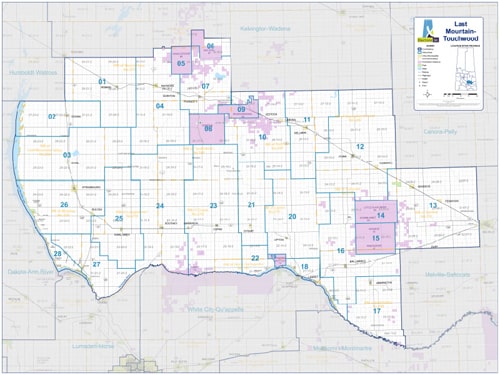
The map of constituency.
MLA Office
Constituency Assistant: Tina Knowles
PO Box 928
110 Elgin Street
Balcarres, SK
S0G 0C0
Phone: (306)-334-3444
Email: mla@traviskeisig.ca